A dramatic story about a supposedly enormous eagle near Brownsville, Texas, has been circulating online, leaving thousands of readers wondering whether scientists have discovered something extraordinary near the U.S.–Mexico border.
According to versions of the viral story, hikers encountered a massive bird of prey with a wingspan approaching 10 feet, after which wildlife specialists supposedly captured it and transported it to a conservation facility for examination.
If true, the discovery would immediately attract enormous scientific attention.
There’s just one major problem: there is currently no verified scientific evidence confirming that an unknown giant eagle was captured in Brownsville. Recent versions of the circulating story themselves acknowledge the absence of official confirmation.
The Photograph Certainly Looks Impressive
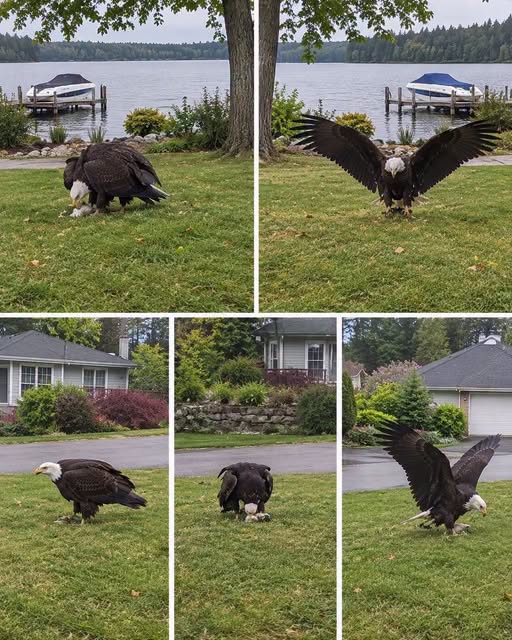
Part of the story’s popularity appears to come from photographs showing an eagle that looks extraordinarily large compared with objects in the background.
At first glance, the bird can seem almost impossibly huge.
But photographs can be deceptive when objects are positioned at different distances from the camera.
An older viral post carrying the “Giant Eagle captured in Brownsville, Texas” description generated considerable discussion for exactly this reason. Commenters pointed out that the eagle appeared to be much closer to the camera and positioned on elevated ground, while vehicles and buildings were farther away. That forced perspective can make an ordinary large eagle appear enormous.
What About the Reported 10-Foot Wingspan?
This is where the claim becomes especially difficult to verify.
Several websites repeat nearly identical descriptions of a bird with an estimated wingspan of around 10 feet, supposedly discovered by hikers and later examined by wildlife experts.
However, repeating a claim doesn’t independently confirm it.
A scientifically extraordinary discovery would normally require measurable evidence: verified photographs, physical measurements, species identification and documentation from qualified wildlife researchers or institutions.
The accounts located for this story don’t provide that level of independent confirmation.
Was the Eagle Actually Captured?
The word “captured” may itself be contributing to the confusion.
It can mean physically catching an animal, but it can also mean capturing something in a photograph.
The older viral image produced exactly that misunderstanding, with viewers debating whether the headline meant the eagle had been physically caught or simply photographed.
Newer versions of the story go considerably further, claiming wildlife specialists physically captured the bird and moved it to a facility.
But without confirmation from an identifiable wildlife organization, those details should be treated as unverified.
Why Giant-Bird Stories Spread So Quickly
The idea is irresistible.
An enormous eagle appearing near the Texas border sounds like something from a wildlife documentary—or even a prehistoric world.
Combine an impressive photograph with claims of hikers, scientists and a mysterious 10-foot wingspan, and the story contains nearly everything required to become viral.
But extraordinary wildlife discoveries require strong evidence.
Perspective alone can dramatically distort apparent size, particularly when there’s no reliable object beside the animal for scale.
Texas Really Does Have Impressive Birds of Prey
None of this makes large eagles any less spectacular.
Eagles are genuinely imposing animals, and seeing one nearby can create a completely different impression than seeing photographs or television footage.
A large bird spreading its wings at close range can appear enormous without representing an unknown species.
That’s why researchers use measurements and physical characteristics rather than visual impressions alone when identifying wildlife.
An Amazing Image — But Not a Confirmed New Species
For now, the safest conclusion is considerably less sensational than the viral headline.
Stories claiming that an unprecedented giant eagle was captured near Brownsville are circulating online, but searches did not reveal reliable scientific confirmation of an unknown giant eagle species or a documented 10-foot specimen being captured there.
That doesn’t make the photograph boring.
In fact, it demonstrates something fascinating about both wildlife and human perception.
Put a genuinely impressive eagle in the foreground, place familiar objects much farther behind it, choose the right camera angle—and suddenly an ordinary bird can look like something prehistoric.
Sometimes the mystery isn’t hiding in the Texas wilderness.
It’s hiding in the perspective of the photograph.