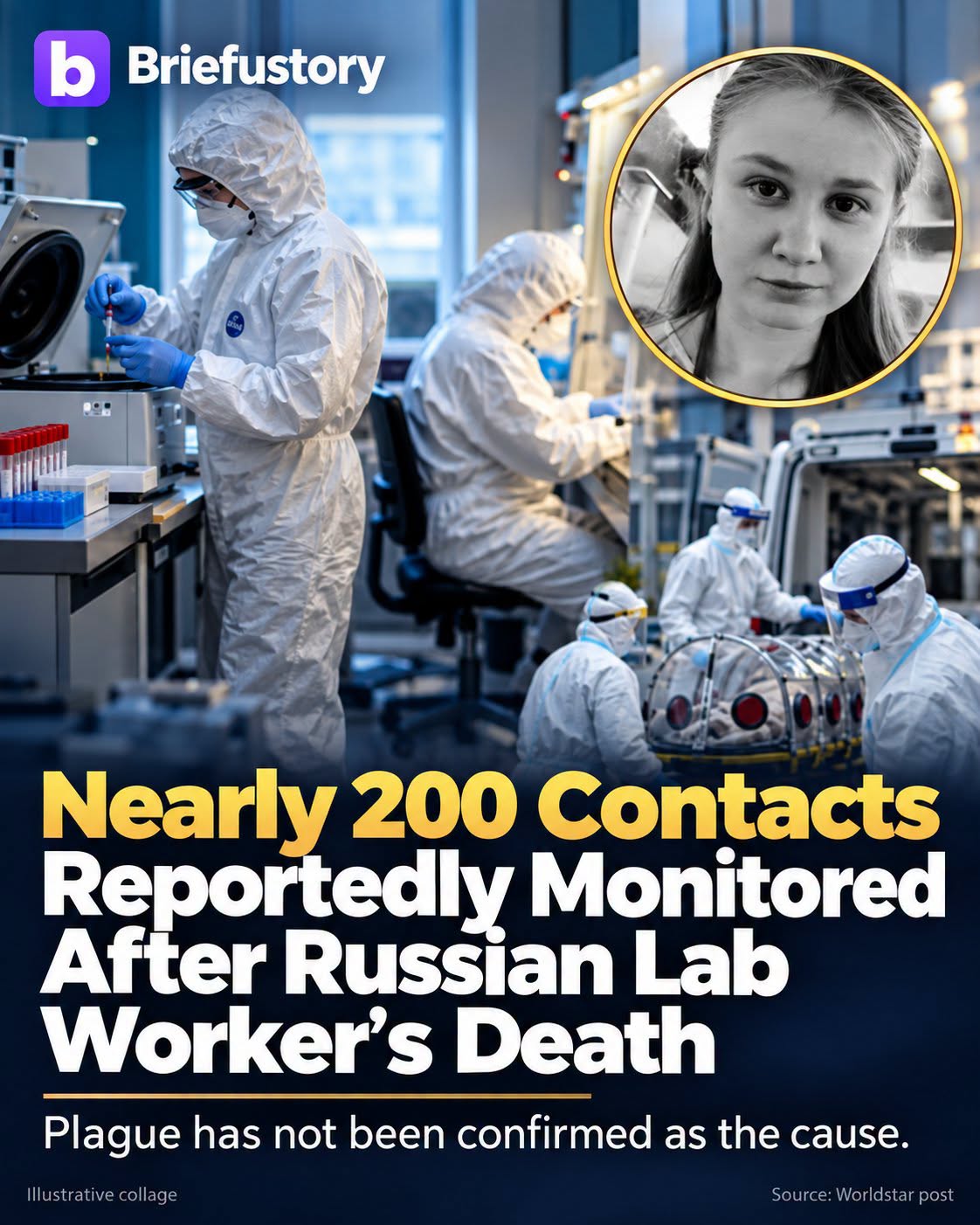
Health authorities are reportedly monitoring nearly 200 people following the death of a laboratory worker in Russia, a case that has attracted attention because of concerns about possible exposure to a serious infectious disease. However, an important distinction remains: plague has not been officially confirmed as the cause of the worker’s death, and the circumstances surrounding the case continue to be examined.
According to reports circulating about the incident, health officials identified individuals who may have had contact with the worker and placed them under medical observation as a precaution. Contact monitoring is a standard public-health measure used when authorities are investigating the possibility of exposure to certain infectious diseases.
The reported number of people being monitored does not mean that nearly 200 people are infected. Instead, a contact list can include colleagues, relatives, medical personnel and others who may have interacted with an individual during a period considered relevant to an investigation.
Such precautions allow health professionals to watch for possible symptoms, evaluate the level of exposure and respond quickly if additional medical testing becomes necessary.
Why the Case Has Attracted Attention
The involvement of a laboratory worker has inevitably generated interest online, particularly because laboratories that handle biological samples operate under strict safety procedures. When an employee connected to this type of environment dies unexpectedly, questions about workplace exposure can quickly emerge.
Nevertheless, the existence of a laboratory connection alone does not establish the cause of an illness or death.
Determining whether a particular pathogen was involved requires clinical evidence, laboratory testing and an investigation of the circumstances. Until those findings are available, claims identifying a specific disease should be treated cautiously.
This distinction is especially important because reports surrounding the case have mentioned plague, an infectious disease caused by the bacterium Yersinia pestis. Although plague is historically associated with devastating epidemics, cases still occur occasionally in different parts of the world.
Modern medicine, however, has significantly changed the way the disease is managed. When recognized early, plague can generally be treated with appropriate antibiotics, while rapid identification and monitoring of potentially exposed individuals can help limit further transmission.
What Contact Monitoring Actually Means
The phrase “under monitoring” can sound alarming, but it should not automatically be interpreted as quarantine, hospitalization or confirmation of infection.
Public-health teams frequently identify contacts out of an abundance of caution. Depending on the suspected disease and the nature of the exposure, those individuals may be asked to monitor their temperature, report symptoms or remain in communication with medical authorities for a defined period.
Investigators may also separate people into different risk categories based on how close and how prolonged their contact was.
For example, someone who had brief contact with an individual may be treated differently from someone who worked closely alongside that person or provided direct medical care.
This process helps authorities determine whether there is evidence of transmission beyond the original case.
Investigation Remains Important
One of the most significant details in the current reports is what has not yet been established.
The worker’s death should not automatically be described as a confirmed plague death unless laboratory or health authorities provide evidence supporting that conclusion. Early reports during health investigations can change substantially as testing is completed and additional information becomes available.
There can also be several possible explanations for an illness before a final diagnosis is established.
For that reason, responsible reporting requires separating confirmed information from speculation, particularly when discussing diseases capable of causing public concern.
The reported monitoring of nearly 200 contacts indicates that authorities are taking the situation seriously and applying precautionary measures. It does not, by itself, demonstrate that an outbreak is underway.
What Happens Next
Attention will now focus on the results of the investigation, including any laboratory findings related to the worker’s death and whether any of the monitored contacts develop symptoms consistent with the disease being investigated.
If testing identifies a specific infectious agent, health authorities can determine what additional measures are necessary. If no evidence of transmission is found among contacts, monitoring may conclude without further action.
Until more definitive information becomes available, the most accurate description is that nearly 200 contacts have reportedly been monitored following the death of a Russian laboratory worker, while the precise cause of death and any connection to plague remain subject to confirmation.
The situation also demonstrates why contact tracing and early surveillance remain important tools in public health. Acting cautiously at the beginning of an investigation allows authorities to identify potential problems quickly while avoiding assumptions about an outbreak before the scientific evidence is available.
For now, the case remains under scrutiny, and any definitive conclusions should depend on verified findings from the relevant health and laboratory authorities rather than speculation circulating online.